The He-for-She from Trofani: How Collins Cocodia Turned His Hustle into Hope for Women
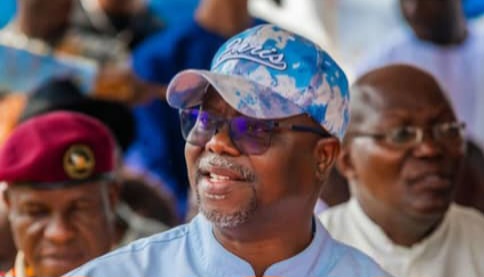
In a world where many speak loudly but act little, High Chief Collins Boneladoh Cocodia has built a reputation not from grand promises, but from quiet sacrifices. Each initiative he funds, every widow he uplifts, every girl child he empowers — all spring from his own pocket, his own sweat, and his deep conviction that equality is not a favour; it is a right.
When asked how he funds his gender advocacy, his answer is disarmingly simple — and profoundly revealing.
“It is self-resourced from my salaries and businesses. I save a particular percentage of what I get as a political appointee and from my businesses, and plunge it into supporting gender crusades and foundations. I have never had support from friends. No one person has supported me in doing this — I’ve been doing it on my own.”
This is not the language of a man seeking applause. It is the voice of a survivor who has seen hardship, tasted rejection, and still chosen compassion as his calling.
Born in Lagos but sent “back to the village to die,” as he recalls, Cocodia’s childhood was anything but privileged. He found a new beginning in Trofani, under the care of his grandmother — a woman he fondly describes as having a “PhD in local accounting.” From her humble cassava grinding mill, he learned his first lessons in discipline, enterprise, and saving.
“She had three containers she called money savers,” he smiles. “One was for business reinvestment, one for upkeep, and the third was mine to take back to school.”
Those early lessons built the foundation for the resilient man he became. While studying Political Science at Delta State University, Abraka, Cocodia was not the student with luxury; he was the student with purpose. He sold female wears and accessories, cleared cassava farms during holidays, tapped palm wine, worked as a photographer, and even served as an MC — anything to stay in school and stay alive.
“I was an indigent student,” he says, without self-pity. “I did several menial jobs to survive — but God was by my side.”
That same grit would later shape his life of service. When he speaks about why he champions women, his voice steadies, his tone deepens.
“I have seen a lot of women being abused and molested. I’ve seen women killed because they’re called the weaker vessel. For me, every human being is created equally. While growing up, I saw that happen — and it still happens. Now as an adult, I feel somebody needs to speak for them. That’s what informed my decision to become a He-for-She.”
Today, Cocodia’s name rings across the Niger Delta not just as a political figure, but as a protector of the vulnerable. From paying school fees for indigent students to supporting widows, providing JAMB forms, funding youth corps members, visiting orphanages, and offsetting hospital bills, his impact is woven into everyday lives.
He credits Barrister Dise Ogbise Goddy-Harry, a notable women’s rights advocate, for ushering him into the gender advocacy space — a move he calls one of the best decisions of his life.
“It affords me the opportunity to offer service to the female gender,” he reflects. “There are no regrets for this decision.”
From Trofani’s cassava mill to the corridors of governance, Cocodia’s story is not one of luck — it’s one of labor, faith, and purpose. His is a journey that reminds us that empowerment begins not with wealth, but with will.
As the cover of this month’s Reflector Magazine boldly declares:
“He Stood Up for Her.”
And in doing so, Collins Cocodia has become more than a name — he has become a movement, a mirror reflecting what one man’s compassion can achieve in a world that still needs more men to care.