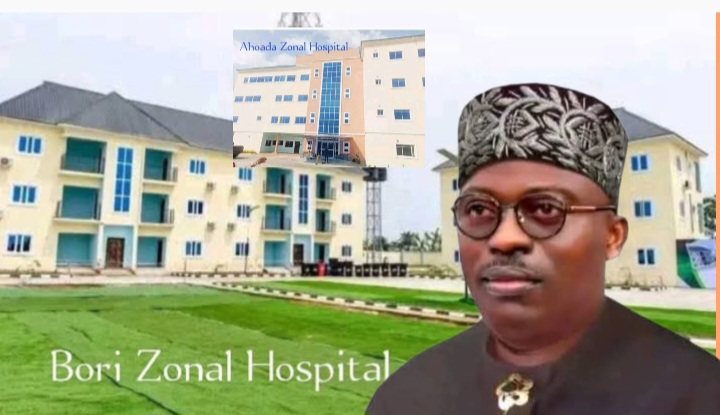
Revitalised Zonal Hospitals: A Defining Shift in Rural Healthcare Access
When Sir Siminalayi Fubara assumed office as Governor of Rivers State, one of the clearest measures of his administration’s commitment to inclusive development lay in the fate of the state’s zonal hospitals. Conceived as vital pillars of healthcare access for rural populations, these facilities had instead become enduring reminders of abandonment and unrealised public promise.
The Ahoada, Omoku, Bori, Degema and Etche Zonal Hospitals shared a deeply troubling history. Originally awarded during the administration of Rt. Hon. Chibuike Rotimi Amaechi, the projects saw little to no substantive construction. Over time, they deteriorated into skeletal, unsafe structures, exposed to the elements and stripped of the life-saving purpose they were meant to serve.
Attempts at revival under successive administrations yielded limited outcomes. When the Nyesom Wike administration inherited the projects, contracts were re-awarded and funds appropriated. However, the critical releases required for sustained construction did not follow, leaving the hospitals once again stalled and reinforcing public distrust in government-led infrastructure delivery.
Governor Fubara’s approach marked a clear break from this cycle of inertia. Rather than continuing fragmented interventions, his administration initiated a comprehensive technical and policy reassessment of the zonal hospital projects. This process aligned the facilities with contemporary healthcare standards, population growth realities and the evolving service needs of host communities.
A major outcome of the reassessment was the expansion of capacity and functionality. At both the Bori and Ahoada Zonal Hospitals, bed capacity was increased from 85 to 105. In addition, staff quarters, expansive parking facilities and modern mortuary services were incorporated, clear indicators of an intent to build hospitals that are service-ready and sustainable.
Beyond bed numbers, the revitalised hospitals were designed with holistic healthcare delivery in mind. Laundry services, staff quarters accommodating at least, up to 24 healthcare workers, parking space for over 100 vehicles, standby power-generating systems and well-maintained green landscapes collectively create environments that support efficiency, dignity and healing, elements often neglected in public health infrastructure.
Despite the disruption occasioned by six months of emergency rule, the Fubara administration recorded tangible progress within a short period. The Bori Zonal Hospital was completed and commissioned in March 2025, followed by the Ahoada Zonal Hospital in December 2025, with both facilities now fully operational.
The revitalised hospitals house comprehensive medical services, including diagnostic laboratories, operating theatres supported by central sterile services departments, intensive care units and paediatric wards. Obstetrics and gynaecology services are central, with delivery suites, nurseries and neonatal intensive care units, complemented by general and private wards for male and female patients.
Administrative offices, libraries and conference halls provide essential spaces for governance, training and policy coordination, while kitchens, cafeterias and landscaped recreational gardens cater to the welfare of patients, staff and visitors. Together, these features reflect a modern understanding of healthcare institutions as complex service ecosystems.
This strategic emphasis on secondary healthcare at the zonal level is deliberate. By strengthening mid-tier medical services, the administration is easing pressure on tertiary hospitals, improving referral efficiency and ensuring that patients receive timely interventions closer to their communities.
The Ahoada Zonal Hospital, in particular, is positioned as a regional referral hub. With expanded capacity and upgraded infrastructure, it is expected to significantly improve outcomes in maternal health, emergency response, surgery and general medicine across its catchment areas.
Beyond the completed projects, Governor Fubara has reaffirmed his commitment to finishing the remaining zonal hospitals. Construction at the Omoku, Degema and Etche Zonal Hospitals is progressing steadily, with commissioning targeted before the end of March 2026, a continuation of a governance philosophy that places people at the centre of development, treats healthcare as a core social investment, and transforms once-derelict structures into enduring symbols of renewed public trust and responsibility.
Culled from Rivers State Television