X-Raying NAPTIP Bayelsa’s Strategic Collaborations Under Commander Ngozi Opara
By Victor Oroyi – Since assuming office in February 2026, the Bayelsa State Command of the National Agency for the Prohibition of Trafficking in Persons (NAPTIP) under the leadership of State Commander, Mrs. Ngozi Opara, has embarked on a deliberate and structured campaign to strengthen inter-agency collaboration in the fight against human trafficking.
Her approach, marked by a series of high-level courtesy visits and stakeholder engagements, signals a shift toward a more coordinated and intelligence-driven strategy in tackling trafficking networks across Bayelsa State.
A Strategic Takeoff
Mrs. Opara’s assumption of office on February 2, 2026, followed the interim leadership of Mr. Fadeware Timiebiowei, who handed over the command after serving in an acting capacity. From the onset, the new Commander made her intentions clear—prioritizing professionalism, teamwork, and aggressive action against traffickers.
Described as a seasoned investigator, Opara immediately called on officers to uphold the agency’s core mandate while pledging to rid the state of human trafficking activities.
Building Bridges Across Security Agencies
Understanding that human trafficking is a complex and organized crime, Opara has prioritized synergy with key security institutions.
Her first major outreach was to the Nigeria Security and Civil Defence Corps (NSCDC) in Yenagoa. During the visit, she emphasized the importance of collaboration, particularly in suspect management, joint operations, and intelligence sharing. The NSCDC leadership, in response, assured NAPTIP of unwavering support.
A similar engagement followed with the Nigeria Police Force, where discussions centered on strengthening operational cooperation. The Commissioner of Police pledged enhanced support, reinforcing the role of law enforcement in dismantling trafficking syndicates.
Further extending its collaborative reach, NAPTIP engaged the Federal Fire Service, highlighting unconventional but critical partnerships. The focus included joint sensitization campaigns and information dissemination—key tools in prevention efforts.
Intelligence and Security Reinforcement
Recognizing the vital role of intelligence in combating trafficking, the Command also strengthened ties with the Department of State Services (DSS). During the engagement, both agencies reaffirmed their commitment to intelligence sharing and operational support.
The DSS further demonstrated its commitment by pledging logistical assistance, including the provision of operational vehicles when needed—an important boost for field operations.
Engaging Government and Social Institutions
Beyond security agencies, Opara has also extended collaboration to civil and governmental bodies. The Bayelsa State Ministry of Women Affairs, through its Department of Human Trafficking, paid a visit to the Command, signaling alignment in policy and advocacy.
The partnership underscores the importance of a whole-of-society approach, integrating social services, awareness campaigns, and victim support mechanisms into the broader anti-trafficking framework.
Symbolism and Advocacy: The Red Card Initiative
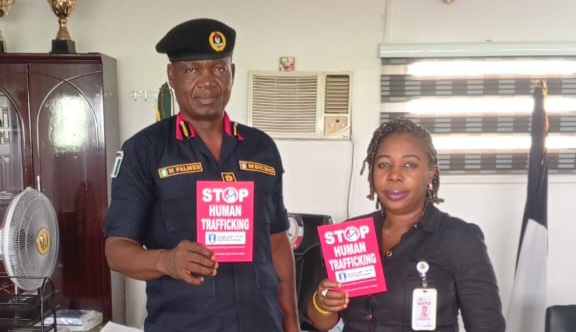
A recurring highlight across these engagements has been the symbolic issuance of “Red Cards” to human traffickers. This initiative serves as both a warning and a public awareness tool, reinforcing NAPTIP’s zero-tolerance stance.
Alongside this, the distribution of Information, Education, and Communication (IEC) materials has been central to the Command’s advocacy strategy—targeting prevention through awareness.
A Coordinated War Against Trafficking
Commander Opara’s consistent message throughout these engagements is clear: the fight against human trafficking cannot be won in isolation. By fostering partnerships across security, intelligence, and social institutions, NAPTIP Bayelsa is laying the groundwork for a unified and more effective response.
Her leadership reflects a proactive doctrine—one that prioritizes collaboration, strengthens institutional relationships, and leverages collective capacity.
Looking Ahead
With a growing network of strategic allies and a clear operational vision, the NAPTIP Bayelsa State Command appears poised to intensify its crackdown on trafficking activities.
As these partnerships deepen, the real test will lie in translating collaboration into measurable outcomes—rescued victims, prosecuted offenders, and ultimately, a safer Bayelsa free from the grip of human trafficking.