ABER Inaugurates Women’s Forum, Unveils Two-Year Blue Economy Campaign
By Mercy Tula, SOUTH SOUTH CORRESPONDENT — The Africa Blue Economy Roundtable (ABER) has inaugurated the Executive Bureau of its Women’s Forum, comprising women leaders from Africa’s five regions and the Diaspora, to promote women’s participation in the continent’s growing Blue Economy.
The virtual inauguration was conducted by the Convener of ABER, Dr. Piriye Kiyaramo, who charged the new executive to translate maritime policies into practical initiatives while advancing the inclusion of women in the sector.
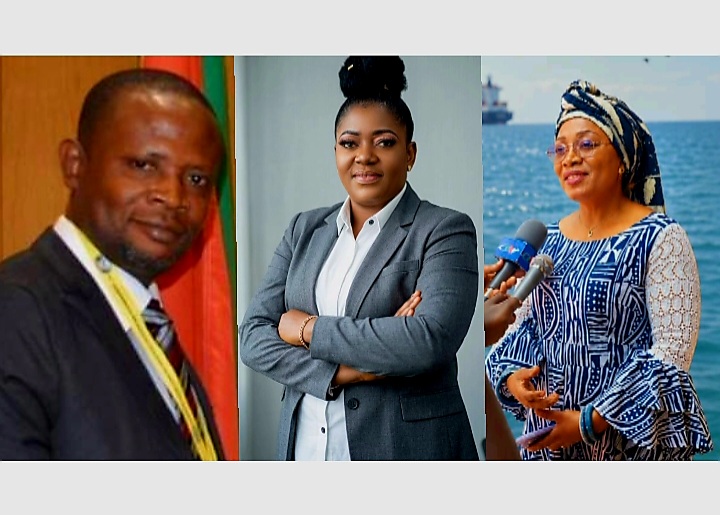
The inauguration brought together women leaders from across Africa, including Barrister Sophie De Sylvie Djoufa Tiemagni of Cameroon, who was appointed Chairperson of the Bureau, and Dr. Chizoba Christiana Anyika of Nigeria, who serves as Secretary-General.
Speaking during the event, Kiyaramo described the inauguration as more than an organisational milestone, calling it “the correction of a 500-year-old injustice.”
He announced that the Women’s Forum would spearhead ABER’s contribution to two major campaigns over the next two years: the International Maritime Organisation’s (IMO) 2026–2027 World Maritime Day theme, “From Policy to Practice: Powering Maritime Excellence,” and the African Union-endorsed Correct The Map Campaign.
According to Kiyaramo, Africa must move from the margins to the centre of global maritime affairs by ensuring that women are adequately represented in the sector.
“ You cannot power maritime excellence with a wrong map and a workforce that excludes women,” he stated.
Citing 2024 data from the Food and Agriculture Organisation (FAO), he highlighted gender disparities in fisheries and aquaculture, noting that while women account for a significant proportion of processing and value-addition activities, their representation in production management and ownership of maritime assets remains limited.
He said women in Africa perform between 60 and 80 per cent of post-harvest activities but have limited access to vessel ownership, port concessions and insurance.
On the Correct The Map Campaign, Kiyaramo drew attention to the distortions associated with the 16th-century Mercator projection, which he said had contributed to misconceptions about Africa’s geographical size.
He noted that Africa, with a landmass of approximately 30.3 million square kilometres, is significantly larger than its representation on conventional Mercator maps suggests.
Three-Pillar Implementation Plan
As part of the Women’s Forum’s proposed implementation framework for 2026–2027, Kiyaramo called for grassroots certification programmes for women in areas such as tour guiding, boat safety operations and aquaculture.
He also advocated the inclusion of women as Flag State and Port State Control Officers, as well as the domestication of IMO instruments in coastal and riverine communities.
He cited Oyorokoto in Rivers State, Brass in Bayelsa State, Limbe in Cameroon and Zanzibar in Tanzania as examples of communities where maritime standards and opportunities should be made accessible.
The ABER Convener further proposed the promotion of the Equal Earth map projection in maritime academies and schools where members of the organisation teach.
He charged the new Bureau to work towards increasing women’s representation in management and vessel ownership to 40 per cent.
“Our goal is to make the invisible visible, move women from processing to power and ensure that standards are felt in every creek, not just every port,” he said.
In her remarks, the Chairperson of the Women’s Forum, Barrister Sophie Djoufa Tiemagni, said the initiative would position African women as active participants in the continent’s sustainable Blue Economy.
“Our vision is simple but powerful: to make African women ambassadors and active drivers of a sustainable Blue Economy—from policy to practice,” she said.
Tiemagni said the forum would work towards ensuring that women were visible in policy formulation, present in decision-making spaces, equipped with relevant skills, connected to partnerships and empowered with access to resources.
She also unveiled the proposed theme for ABER’s World Maritime Day Conference: “Correcting the Map, Powering Maritime Excellence: Women Driving Africa from Policy to Practice.”
She proposed four immediate steps, including the adoption of the theme, preparation of a concept note for the IMO 2026–2027 campaign, submission of the document to the IMO Secretariat and the establishment of a drafting team.
Tiemagni further suggested that the conference be held on a Wednesday or Friday during World Maritime Day Week to avoid a clash with official national events scheduled for Thursday, September 24.
Kiyaramo said the inauguration marked another step towards positioning Africa at the centre of the global ocean economy.
“The Women’s Forum is how we will get there, with no woman left behind,” he added.
The Africa Blue Economy Roundtable is a flagship initiative of the BRACED Tourism Promotion and Development Initiative (BTPDI), a Pan-African platform focused on sustainable Blue Economy development, investment and inclusive growth.