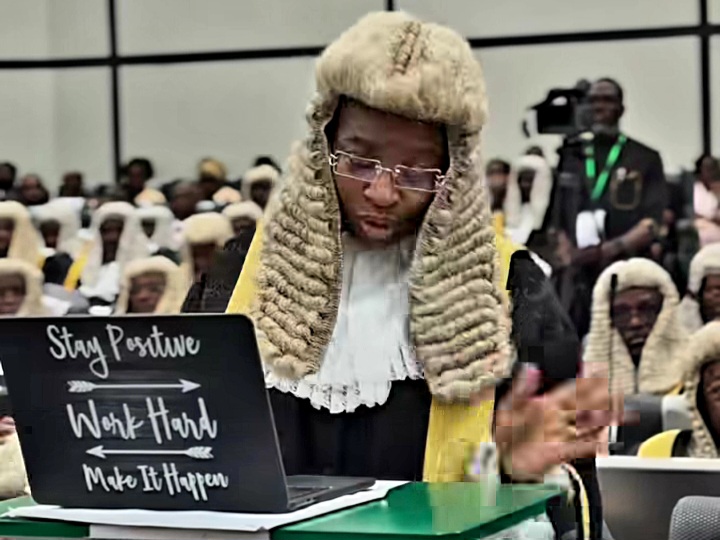
NBA President Calls for Justice Nigerians Can Feel, Urges Legal Reforms
By Tams Jonah, ABUJA – The President of the Nigerian Bar Association (NBA), Oyinkansola Badejo-Okunsanya, SAN, has called for reforms that will make justice more accessible, timely and meaningful to Nigerians, stressing that the effectiveness of the legal system must be measured by its impact on people’s lives.
Badejo-Okunsanya made the call while reflecting on the opening of the 2026/2027 Legal Year at the Supreme Court, where she emphasised the need to bridge the gap between rights guaranteed by law and the practical enjoyment of those rights by citizens.
The NBA president, who returned to the Supreme Court a year after being conferred with the rank of Senior Advocate of Nigeria (SAN), described the occasion as a moment of gratitude and reflection on the responsibilities that come with professional accomplishments and leadership.
She said the occasion reinforced the need for lawyers and judicial institutions to ensure that the justice system delivers meaningful outcomes for the people it is established to protect.
According to her, the existence of legal rights means little when those entitled to them cannot access the remedies and protection guaranteed by the law.
“The distance between a right written into law and a right truly enjoyed remains one of the most important tests of our justice system,” she said.
Okunsanya identified delays in judicial proceedings, barriers to accessing justice and experiences that undermine public confidence in the courts as some of the challenges requiring urgent attention.
She stressed that closing the gap would require more than public declarations of commitment, calling for accountability, institutional reforms and a sustained commitment to improving the administration of justice.
The NBA president also urged members of the legal profession to examine their internal practices, noting that lawyers must demonstrate the values of dignity, fairness and justice they advocate for in society.
She highlighted ethical conduct, the treatment of young lawyers, remuneration and the creation of opportunities for the next generation of legal practitioners as areas requiring attention within the profession.
According to her, a legal profession committed to justice must ensure that its own members uphold the principles they expect public institutions and society to observe.
She maintained that the beginning of a new Legal Year should serve as an opportunity to strengthen the capacity of the justice system to protect rights, resolve disputes and restore public confidence.
Okunsanya said the credibility of the legal profession should not be determined solely by the principles lawyers defend or the declarations they make, but also by the tangible improvements those principles bring to people’s lives.
“As we begin another Legal Year, our task is not simply to celebrate the law, but to strengthen its capacity to protect, to resolve, to restore and to serve,” she stated.
She added that the profession must assess its progress by the changes it delivers in the lives of citizens rather than the number of statements or commitments made.
“We must measure our work by what changes in people’s lives, not by how many declarations we make. One experience of justice at a time,” the NBA president said.
Her message places access to justice, judicial efficiency, professional accountability and public confidence at the centre of the legal profession’s responsibilities as the 2026/2027 Legal Year begins.