SSDC, Federal Universities Forge Stronger Partnership For South-South Development
By Mercy Tula, SOUTH SOUTH CORRESPONDENT – Across the South-South, universities are sitting on a wealth of knowledge, research and young talent capable of changing the region’s development story. But for that potential to move beyond lecture halls and research papers into jobs, innovation and solutions to everyday challenges, stronger collaboration is needed.
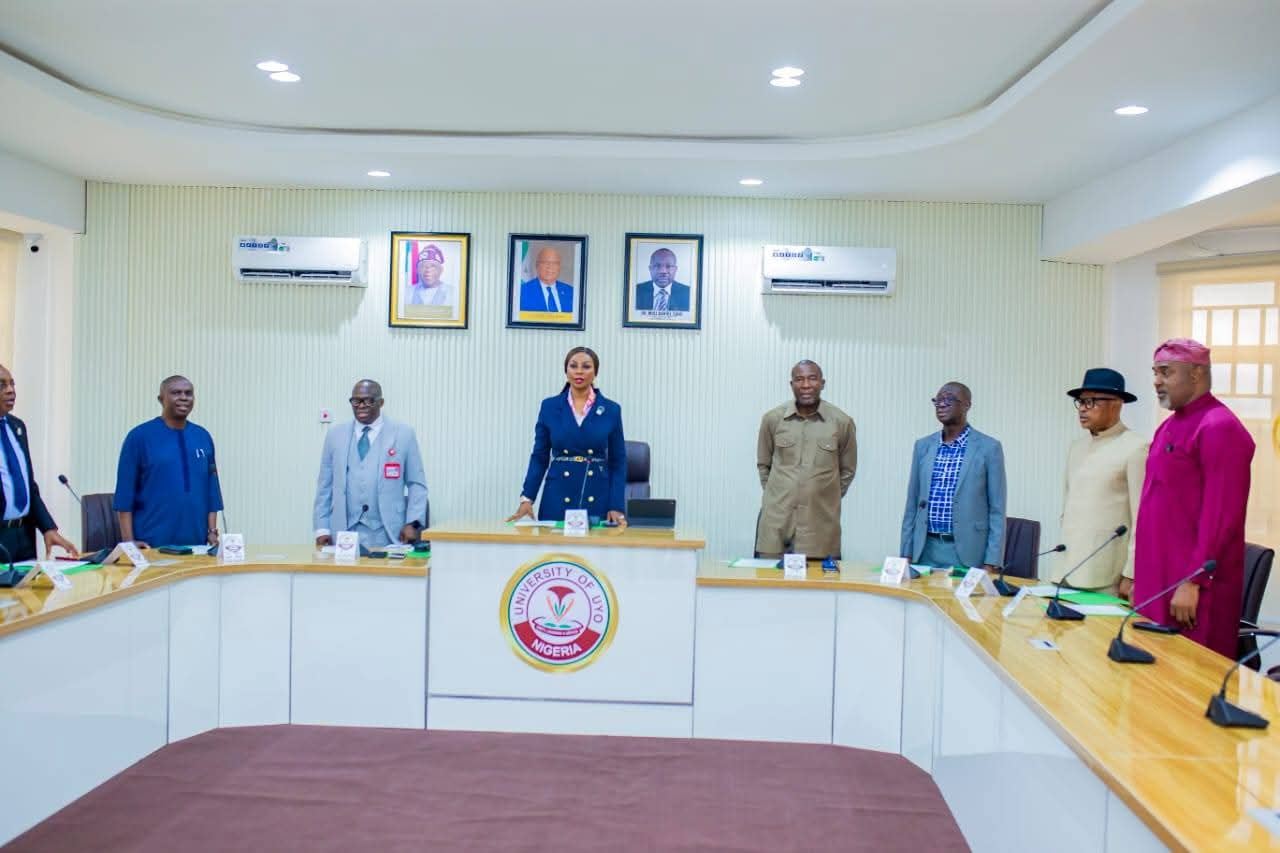
That challenge took centre stage on Friday, September 11, 2026, when the South-South Development Commission (SSDC) brought together Vice-Chancellors of federal universities across the region for a strategic engagement at the University of Uyo, Akwa Ibom State.
Led by the Managing Director/Chief Executive Officer of the Commission, Ms Usoro Akpabio, the meeting sought to build a stronger bridge between the region’s academic institutions and the SSDC’s development mandate, with emphasis on research, innovation, skills development, technical expertise and human capital development.
The engagement marked an important step towards creating a more coordinated relationship between the commission and institutions of higher learning, particularly in deploying academic knowledge and research to address the peculiar development challenges confronting the South-South.
For the SSDC, the region’s universities are not merely centres for teaching and learning but critical partners in the search for sustainable solutions to issues affecting communities, industries and young people.
The meeting provided an opportunity for the commission and the Vice-Chancellors to explore practical areas where their respective strengths could be combined to deliver measurable development outcomes.
Discussions centred on strengthening collaboration in research and innovation, technical expertise, capacity building and skills development, with particular attention to creating opportunities for young people to acquire competencies relevant to the changing demands of the economy.
The engagement also underscored the importance of moving research from academic papers and laboratories into practical applications capable of improving lives and supporting economic development across the region.
For a region endowed with universities, professionals, researchers and a large population of young people, participants recognised that stronger institutional collaboration could unlock significant opportunities for human capital development.
The partnership is also expected to encourage greater utilisation of the technical and intellectual resources available within federal universities in supporting the SSDC’s mandate.
A key message from the engagement was the need for development interventions to be informed by credible research, local expertise and evidence-based solutions.
Rather than operating in separate spaces, the commission and the universities are expected to develop a framework through which academic expertise can directly contribute to policy, planning, innovation and development programmes across the South-South.
The shared commitment of the Vice-Chancellors and the SSDC leadership to deepening the relationship was seen as a significant step towards building a stronger institutional framework for collaboration.
The engagement comes at a time when the South-South faces a range of development challenges requiring innovative approaches and home-grown solutions, particularly in the areas of employment, skills, technology, infrastructure and human capital development.
By bringing the region’s academic leadership into closer conversation with its development commission, the initiative could provide a platform for universities to play a more visible role in shaping the region’s development agenda.
The ultimate goal, according to the commission, is to harness the intellectual resources, research capacity and technical expertise within the region’s tertiary institutions to support sustainable and inclusive development.
For the young people whose future depends increasingly on access to relevant skills, knowledge and opportunities, the significance of the partnership could extend far beyond the walls of the University of Uyo.
If sustained, the emerging collaboration between the SSDC and federal universities could turn the South-South’s vast reservoir of academic knowledge and youthful talent into one of its strongest engines of development.