Thoughts on Heaven Must Wait – Empathetic Nduka
By Victor Oroyi – While Heaven Must Wait explores themes of love, illness, and single parenting, its most powerful lesson is empathy—particularly toward those whose struggles are hidden behind appearances.
This Nigerian movie, Heaven Must Wait, produced by Frederick Leonard, confronts the age-old maxim, “You are addressed the way you dress,” while exposing the lack of empathy and grace often shown to those who are judged by their appearance. While many may disagree and present strong opposing arguments, the movie reflects a sad but familiar reality.
Yes, decent dressing should be encouraged, but many people are battling unseen struggles such as illness, poverty, survival, and the responsibility of caring for fragile family members.
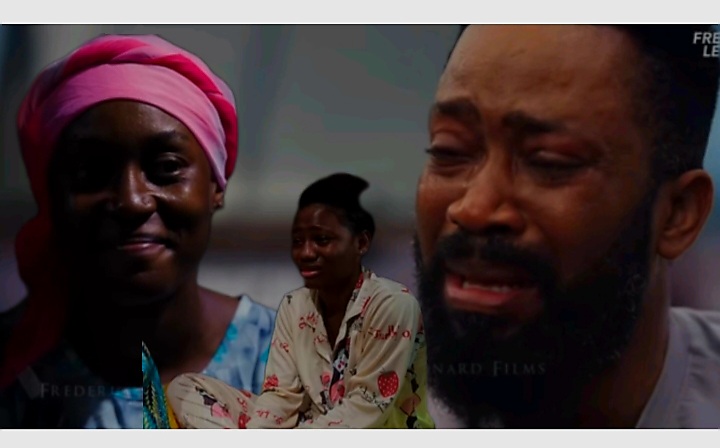
Angel’s confession to her grandmother revealed the depth of the hostility Teacher Dorcas endured at the hands of her students. While Teacher Dorcas’ lifestyle became a subject of ridicule, she was judged and addressed solely based on the way she dressed.
Many may question Teacher Dorcas for keeping her illness to herself, but they often overlook a more important question: Why was she dressed the way she was? Shouldn’t we be concerned about the “why” rather than making people feel less than they are?
Teacher Dorcas did not allow the attitude of the students, the unkind principal, or the gossiping and opportunistic neighbour, Ify, to break her spirit. None of these characters showed her empathy, yet they all expected her to give her best.
Her encounter with Nduka in the opening scene was striking. Nduka was irritated by her attitude and lost his composure, partly because he was already struggling with challenges involving his adolescent daughter.
Despite the lack of empathy shown to her, Teacher Dorcas remained committed to her work and continuously sought opportunities to improve herself. As Angel became more self-aware, Teacher Dorcas treated her differently and positively influenced her growth.
Why do we often wait until we know someone’s story before showing empathy?
Teacher Dorcas was not entirely transparent. Her closeness to Angel stemmed partly from knowing that Nduka was her father. It also presented an opportunity for her to seek support from him.
Empathy is not merely a word; it is an action. It is not simply observed—it is felt. It does not stand by as a spectator but shares in another person’s burden. Empathy stands with people rather than watching from a distance.
Nduka gave Teacher Dorcas some of the most memorable moments of her final days. He transformed her loneliness into family and her scarcity into abundance. That, perhaps, is one of the movie’s most powerful messages.
Nduka deserves commendation. Having lost his first wife, he faced the difficult task of raising Angel, whose life had been negatively affected by that loss. He could have abandoned his responsibilities, but instead, he demonstrated empathy. At a critical point, he left the city to stay with and support his Teacher Dorcas.
Through Nduka’s actions, Frederick Leonard effectively communicated empathy and reminded viewers of the importance of humanity. Though Teacher Dorcas was dying, she continued making sacrifices to educate her students with kindness and a smile. In the process, she became a role model to Angel.
When Angel moved to the city, she searched for another Teacher Dorcas in five different schools but found none. One of the turning points in Angel’s life was her encounter with Teacher Dorcas, but she realized her true value too late.
Judging people solely by the way they dress is contrary to our shared humanity. Imagine the number of people who are silently battling depression, exhaustion, and emotional pain while being unfairly judged by appearances.
Teacher Dorcas was an exception because she possessed the courage to keep fighting until her final days. Her silent prayer was to be kind, impactful, and remembered—and she achieved that through Angel.
Before judging someone by their appearance, perhaps we should ask a few questions first.
The tragedy of Teacher Dorcas is not merely that she was dying; it is that many people around her failed to see her humanity until it was too late. In that sense, Heaven Must Wait challenges viewers to examine not only how they treat others, but how often they judge before they understand.