Coastal Highway: Umahi Clarifies Route, Says Bayelsa Alignment Remains Intact
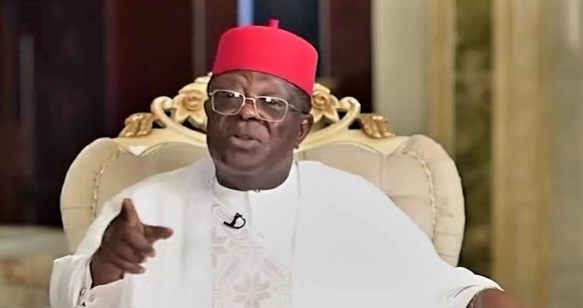
By Tams Jonah, ABUJA – Minister of Works David Umahi has clarified that the Federal Government has not changed the original alignment of the Lagos-Calabar Coastal Highway, saying a proposed connecting spur to the existing East-West Road should not be interpreted as a diversion of the coastal project.
The clarification follows controversy over Umahi’s earlier remarks suggesting that President Bola Tinubu had directed the highway to follow the existing East-West Road from Ondo into Edo State instead of proceeding along a new alignment.
Umahi subsequently explained that the government’s plan was to construct a connecting spur between the coastal highway and the East-West Road, adding that his earlier use of the word “divert” did not accurately convey the intention.
The development is significant for Bayelsa State, where Governor Douye Diri has strongly opposed any arrangement that would make the East-West Road a substitute for the coastal highway.
Diri has maintained that both projects serve different purposes and should proceed as separate infrastructure interventions. He has also argued that Bayelsa and other South-South states should not lose the development opportunities associated with the coastal highway because of decisions concerning the rehabilitation or reconstruction of an existing road.
The governor has said the South-South governors support the coastal highway but oppose a realignment that could undermine its original objectives.
Defending the feasibility of the project in Bayelsa, Diri has pointed to road and bridge projects being undertaken across the state’s difficult terrain, arguing that wetlands and waterways should not be used as reasons to deny coastal communities critical infrastructure.
Bayelsa’s geography presents significant engineering challenges, with extensive creeks, rivers and mangrove wetlands making road construction more complex and expensive. However, improved road connectivity could help reduce transportation difficulties, strengthen commercial links and expand access to communities that rely heavily on waterways.
The coastal highway is intended to improve connectivity across Nigeria’s coastal states and create opportunities for trade, tourism and other economic activities.
For Bayelsa, the proposed route has particular significance because of the state’s development needs and potential in tourism, fisheries and the wider blue economy.
Although Umahi’s latest clarification indicates that the original highway alignment remains unchanged, important details about the Bayelsa section are yet to be conclusively established in the public reports reviewed.
These include the final route map, the specific communities to be served, the construction timetable and the precise relationship between the proposed connecting spur and the East-West Road.
The Federal Government is therefore expected to provide further details to clarify how the two infrastructure projects will complement each other without compromising the coastal highway’s original purpose.
The controversy has also renewed calls for transparency in the planning and implementation of major federal infrastructure projects, particularly those intended to address longstanding connectivity challenges in the Niger Delta.
For Bayelsa, the central concern is whether the final arrangement will provide meaningful access to the coastal highway and deliver the economic benefits expected from the project.
While the minister’s clarification offers reassurance that the highway has not been diverted from its original alignment, the publication of an approved route map and a clear construction schedule for Bayelsa would provide a more definitive basis for assessing the project’s future.