Diri Unveils AI-Powered Robotic Tutors at Bayelsa Medical University
…Inspects Teaching Hospital, Emergency Medical Facilities
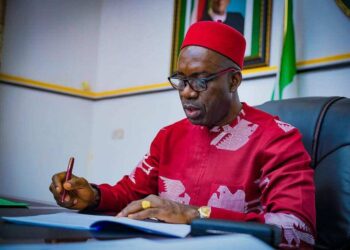
By Jonah Fubara, YENAGOA – Bayelsa State Governor, Senator Douye Diri, has unveiled artificial intelligence (AI)-powered robotic tutors and other digital learning innovations at the Bayelsa Medical University (BMU), Yenagoa, as part of efforts to modernise medical education and strengthen healthcare delivery.
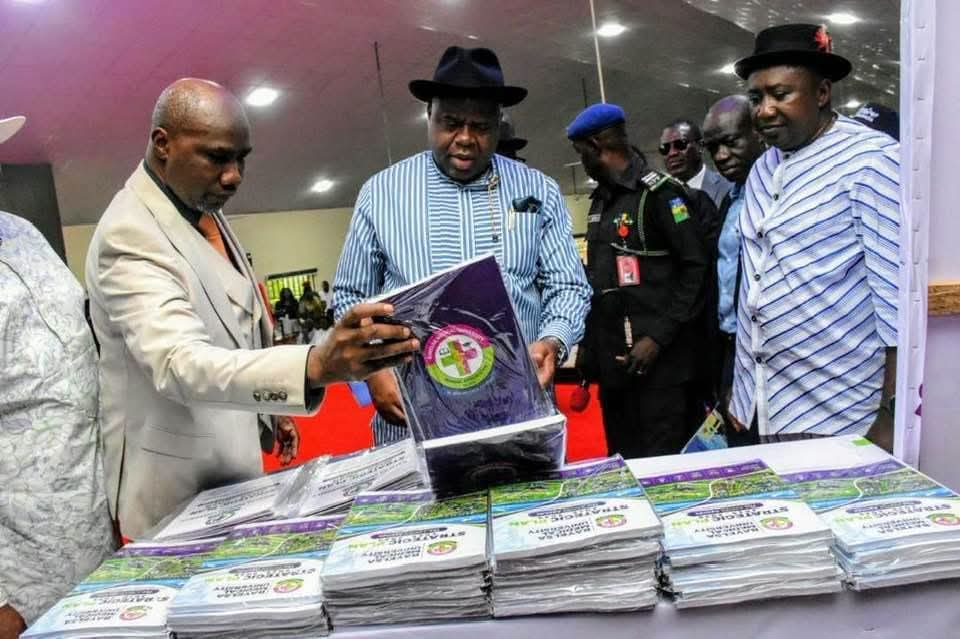
Diri unveiled the innovations on Monday, October 26, 2026, alongside the university’s 2025–2029 Strategic Plan, charging the institution to leverage technology to improve teaching, learning and research without undermining physical classroom interactions and lecturers’ mentorship roles.
The governor described the initiative as a significant milestone in the development of medical education in the state, urging the university management to translate its strategic plan into measurable improvements in academic standards, research, infrastructure and graduate quality.
He reaffirmed his administration’s commitment to supporting the university’s ASPIRE Agenda, which prioritises academic excellence, sustainability, partnerships and engagement, innovation and technology, research excellence, and empowerment, leadership development and welfare.
Diri commended the Vice-Chancellor, Professor Dimie Ogoina, and the university management for developing a roadmap for institutional growth, urging them to work closely with the state Ministries of Education and Health to achieve the plan’s objectives.
He also highlighted his administration’s investment in science, technical and vocational education, expressing confidence that science-oriented schools being established across the state would produce qualified candidates for BMU and other tertiary institutions.
According to him, the initiative would help Bayelsa develop the human resources needed to produce more doctors, nurses, pharmacists, radiologists, engineers and other professionals.
The governor acknowledged the contributions of former Governor Diepreye Alamieyeseigha, who initiated the development of the former 500-bed hospital where the university is situated, and his successor, Senator Seriake Dickson, who revived the project and transformed it into a medical university.
He further disclosed that construction of the university’s campus at Sampou was nearing completion, adding that the facility would provide additional space for the institution’s expansion.
As part of his visit, Diri inspected facilities at the newly established Bayelsa Medical University Teaching Hospital, expressing confidence in its capacity to deliver advanced diagnostic services.
He noted that the hospital was equipped with diagnostic facilities, including X-ray machines and Computed Tomography (CT) scanners, which use X-ray technology and computer processing to produce detailed images of internal body structures.
The governor said the availability of such facilities would improve access to specialised medical services and reduce the need for residents to travel outside the state for certain diagnostic procedures.
He also toured facilities at the Bayelsa State Emergency Medical Services and Ambulance System and inaugurated two lecture auditoriums at the university.
Earlier, Ogoina said his vision was to transform BMU into a globally recognised institution for medical education, research and innovation, driven by technology and sustainability.
He explained that the ASPIRE Agenda was being implemented through institutional teams and initiatives designed to improve academic quality, accountability, innovation and student welfare.
The Vice-Chancellor disclosed that the university had secured accreditation for nine academic programmes, while its nursing science students recorded a 96 per cent pass rate in their professional examinations.
He added that BMU researchers had produced more than 70 peer-reviewed publications, while the university’s College of Medicine had attained full membership of the Consortium of Medical Schools of Africa.
According to him, BMU was also selected as one of 18 medical schools in Nigeria for a high-impact intervention programme.
On digital transformation, Ogoina said the university had established a virtual reality, artificial intelligence and mixed-reality studio, expanded digital connectivity and introduced a “Talk to the VC” application to enable students and staff to communicate directly and confidentially with the university leadership.
He said the institution was strengthening simulation-based learning through its clinical skills laboratory while pursuing plans to develop a smart campus, improve internet connectivity and increase internally generated revenue.
Ogoina further announced that the university was developing a Centre of Excellence for Digital Health and Biomedical Innovation, alongside the Niger Delta Centre of Excellence for Health, Environment and Development, to address regional health and environmental challenges.
He said BMU aimed to become, by 2029, a nationally respected and internationally recognised health sciences institution distinguished by excellence in education, research, innovation, leadership and societal impact.
The Vice-Chancellor thanked the governor for his support, expressing confidence that the university would build on the progress already made to achieve its strategic objectives.