From Policy To Practice: Africa Must Close Maritime Enforcement Gap — Kiyaramo
By Tams Jonah, ABUJA — Chairman, Board of Trustees, BTPDI and Convener/Founder of the Africa Blue Economy Roundtable (ABER), Dr. Piriye Kiyaramo, has called for urgent action to bridge the gap between maritime policies and their implementation across Africa.
Kiyaramo made the call in a goodwill message to mark the 2026 World Maritime Day, stressing that the International Maritime Organization’s (IMO) 2026–2027 theme, “From Policy to Practice: Powering Maritime Excellence,” must translate into tangible benefits for coastal communities.
According to him, the theme comes at a defining moment for Africa, where many coastal communities continue to experience the consequences of weak implementation of policies and international maritime agreements.
He said: “For too long, Africa’s coastal communities, from the creeks of Bayelsa to the beaches of Zanzibar, from Tuléar in Madagascar to the Gullah Geechee communities in the Diaspora, have lived with world-class policies but poor practice.
“This theme is a call to close that enforcement gap and make global rules felt in every port and on every deck.”
Kiyaramo explained that the IMO theme focuses on strengthening Member States’ capacity to translate policies into practice through technical assistance, training and other essential services.
“For ABER, ‘Powering’ means momentum and targeted support, while ‘Excellence’ means a safe, secure, efficient and environmentally sustainable maritime industry operating to the highest standards,” he said.
Implications For Coastal Communities
On biodiversity loss, Kiyaramo said many coastal communities were witnessing declining fisheries and degradation of marine ecosystems despite the existence of international environmental agreements.
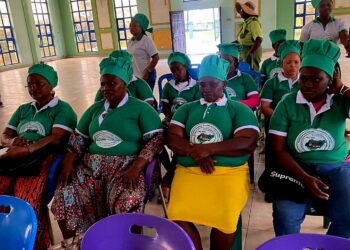
He noted that the destruction of mangroves in the Niger Delta, coral bleaching in the Indian Ocean and depletion of fish stocks in the Gulf of Guinea directly affect fisherwomen, seaweed farmers, boat builders and other coastal livelihoods.
He called for the translation of the Kunming-Montreal Global Biodiversity Framework into practical, community-managed Marine Protected Areas.
On plastic pollution, Kiyaramo said Africa’s coastal states face a growing waste challenge, stressing the need to move beyond policies and ensure effective implementation of relevant maritime and environmental agreements at fish landing sites and within coastal communities.
He also highlighted climate change as an immediate challenge for African coastal communities, citing sea-level rise, coastal erosion and ocean acidification.
According to him, communities in the Niger Delta, coastal Senegal, the Mozambique Channel and low-lying island communities in the Caribbean are already experiencing the effects of climate change.
ABER’s Policy Recommendations
To move from policy to practice, Kiyaramo said ABER is recommending five key areas of action for African governments, the African Union and the African Diaspora.
Powering Legislation: Governments should accelerate the domestication of IMO conventions, the African Blue Economy Strategy and the Moroni Declaration on Sustainable Blue Economy into national maritime laws, backed by clear budgets and enforcement timelines.
Powering People: Governments should invest in capacity development, including the training of seafarers, port workers, flag State and port State control officers, as well as community ocean stewards.
Powering Community-Led Conservation: He advocated the establishment of a Continental Coastal Guardians Fund to support fisherwomen and young people involved in mangrove restoration, turtle protection and locally managed Marine Protected Areas.
Powering Circular Blue Economy: Kiyaramo called for stronger measures against single-use plastics in coastal areas, alongside incentives for seaweed-based packaging, community recycling hubs and green shipping initiatives linking Africa and the Diaspora.
Powering Climate Justice: He urged African countries to integrate ocean-based climate adaptation into their Nationally Determined Contributions, including blue-carbon initiatives, early-warning systems for coastal communities and resilient port infrastructure.
ABER As Strategy-To-Execution Bridge
Kiyaramo said ABER would seek to position itself as a “Strategy-to-Execution Bridge” in advancing the 2026–2027 maritime theme across Africa.
He said the emerging think-tank and delivery platform would leverage its 30-member Tactical Committee, 54 National Coordinators and Diaspora Chapters to translate dialogue into actionable programmes.
According to him, ABER will develop a 90-day Continental Flagship Report on “From Policy to Practice in Africa,” mobilise expertise by strengthening links between academia and industry and between Africa and the Diaspora, while promoting greater inclusion of coastal communities.
“From the creeks of Bayelsa to the shores of the Diaspora, the time to power maritime excellence is now,” Kiyaramo said.
He wished maritime stakeholders across the world a happy World Maritime Day 2026.