Partnerships Built on Trust, Not Illusions – Dr. Johnson Fires Back At Trump
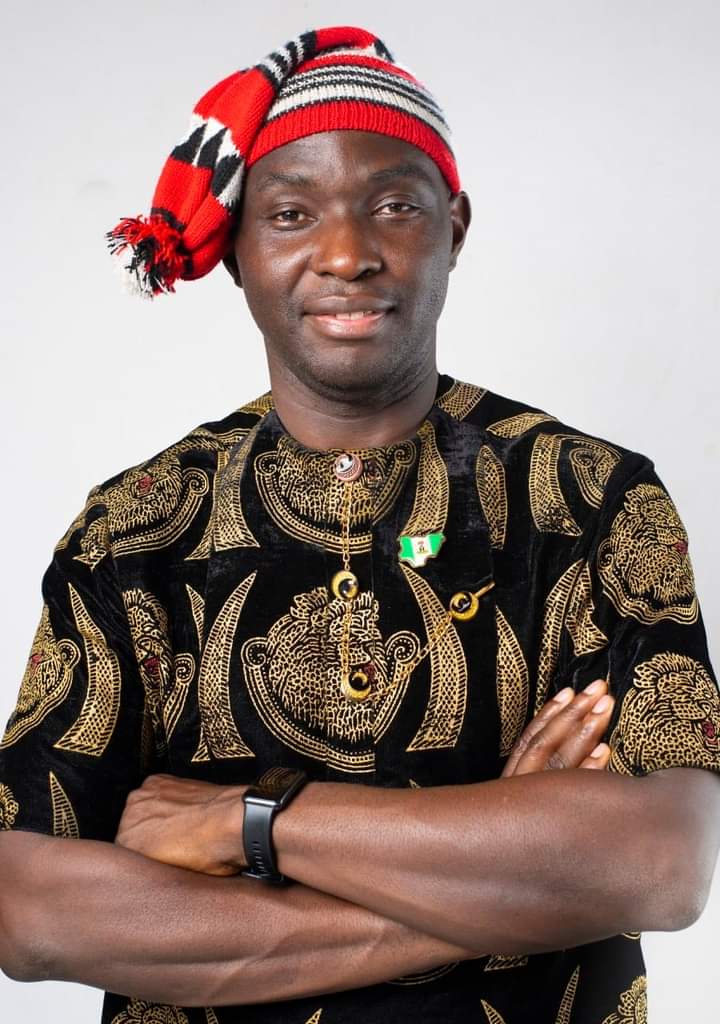
Former Vice Presidential candidate on the platform of the Action Alliance Party (AAP) and Chairman of the Nigeria‑Russia Trade and Investment Advisory Council, Dr. Emmanuel Johnson Chukwuka has maintained that it would be misleading for Nigerians to view the United States of America as a mutual partner. He emphasized that partnerships are built on mutual trust and respect for one another.
Speaking to newsmen in Moscow, Russia, about recent threats issued by American President Donald Trump to Nigeria over alleged genocide against Christians, Dr. Johnson reiterated that it was quite clear that what America stood for in Nigeria right from colonial rule was nothing more than her business interests. He said, “It has been a long‑time plan or agenda that the United States of America had against Nigeria to disintegrate the country, and they have been attempting to achieve this agenda through many means.”
Dr. Johnson maintained that U.S. policy toward Nigeria has historically been driven by economic motives and that the current threat is part of a longer‑standing effort to destabilize the country.
He said: “From our history, it would be misleading for us to think that the United States is a mutual partner. Partnerships are built on mutual trust and respect for one another. Such mutual partnership was never built between Nigeria and the United States of America.”
The United States of America had her embassy in Nigeria when the country was still under the colonial masters. Ask yourself what the US did to help Nigeria come out of the colonial rule. US got her independence since 1776 and, as a matter of fact, had experience of what colonial rule was, but the US never did anything to help Nigeria out the colonial masters.
When the British rolled into Nigeria in 1851, the U.S. didn’t lift a finger to stop them. Actually, the Americans were more or less backing the British hold on the territory. That history makes it a bit naïve to think the U.S. is a genuine partner today.
Fast forward to just a few months ago, Nigeria’s foreign minister revealed the U.S. was mulling sending Venezuelan‑origin prisoners to Nigeria, a move Nigeria flat‑out refused.
Dr. Emmanuel Johnson who hailed Nigeria’s recent BRICS accession as a game‑changer for economic revival pointed out that Nigeria’s massive market, abundant natural resources, and youthful workforce, paired with Russia’s tech and industrial muscle, set the stage for win‑win partnerships, informing that such a bond, built on mutual trust, could dial down the heavy Western sway over the nation.
“With the resources Nigeria has, America would want to do anything to hold Nigeria. Nigeria’s massive oil, gas, uranium, gold, and other mineral wealth make it a strategic prize. The U.S. has historically seen Nigeria as a key energy supplier and a market for its goods, so keeping the country under Western influence serves American economic and security interests. When internal crises flare, like the recent “Christian genocide” accusations, many analysts like me would argue, it’s a way to justify external pressure or intervention, which ultimately protects those same U.S. interests .
“Breaking Nigeria would actually give them an edge. If Nigeria were fragmented, the U.S. could more easily negotiate separate deals with individual regions, gaining leverage over critical resources and weakening any unified Nigerian bargaining power. That’s why some see the current rhetoric around genocide or instability as a potential pretext for foreign meddling. A few months after Nigeria refused to accept prisoners of Venezuelan origin, we are now hearing about the Christian genocide and if we put the dots together, we will know where this is coming from.
“The timing of the genocide claims lines up with heightened U.S.–Nigeria friction, especially after Nigeria’s BRICS entry and the 10 % Trump tariff announcement, which signals a shift toward a more multipolar alignment. The U.S. is using humanitarian language to push a geopolitical agenda, especially given that similar accusations have been leveraged in the past to justify sanctions or military aid.
“The Venezuelan story and that of Nigeria centre on natural resources. Both countries are resource‑rich (oil, gas, minerals) and have faced the U.S. sanctions or pressure that critics describe as “resource‑driven.” In Venezuela, the U.S. has long targeted the oil sector; in Nigeria, the focus is on oil, gas, and mining concessions. This pattern reinforces the view that the “genocide” narrative may be tied to competition for control over those assets.
“What is going on in Nigeria is what I will refer to colonialism because it has not ended. From a pan‑Africanist perspective, the ongoing foreign interference, whether through tariffs, diplomatic isolation, or “humanitarian” accusations, mirrors colonial tactics of divide‑and‑rule.
“The argument is that Western powers, led by the U.S., continue to dictate Nigeria’s economic and political path to safeguard their resource interests, keeping the country in a neocolonial loop,” Dr.Johnson reiterated.
Dr. Johnson also pointed out that Nigeria’s elections are still being steered by Western influence, who gets elected, how budgets are shaped, so the country remains in a neo‑colonial grip.
He contrasted this with Russia, which never colonised Africa and historically backed liberation movements, paying a huge price (about 27 million Soviet deaths) to defeat fascism.
“Because of that record, many Africans view Russia as a genuine, equal partner, unlike the West, which continues to dictate policy. In short, Western meddling keeps Nigeria under “colonial” control, while Russia is seen as a supportive, non‑colonising ally,” Dr. Johnson maintained.