The Gambia Seeks To Replicate Nigeria’s Open Learning Model, Visits NOUN
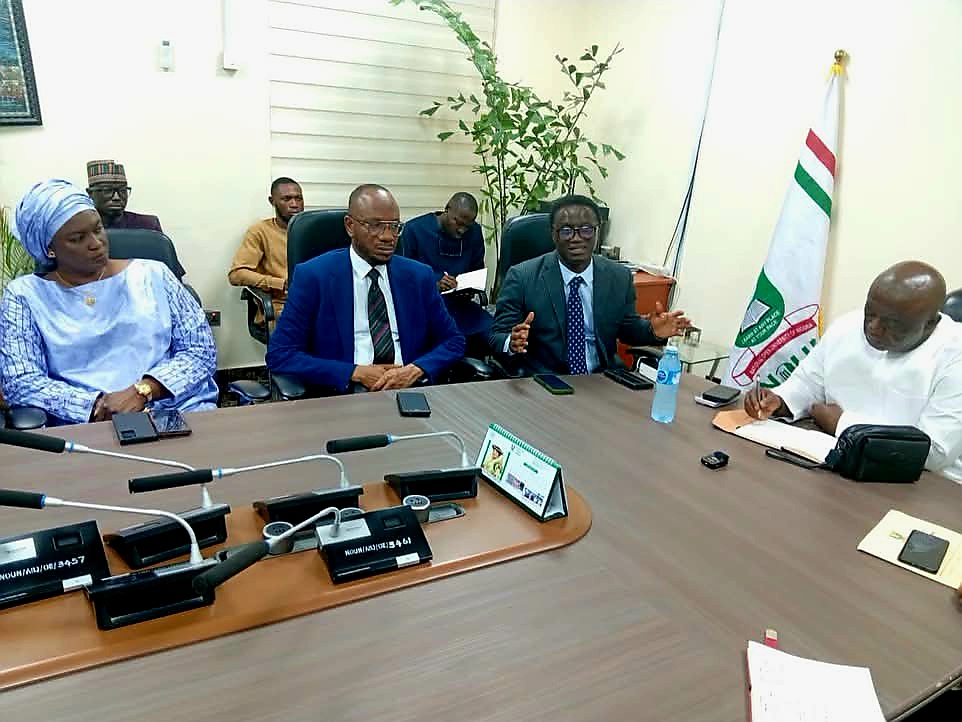
By Tams Jonah, ABUJA — The Government of The Gambia has commenced a study visit to the National Open University of Nigeria (NOUN) as part of efforts to strengthen its higher education system through the adoption of Nigeria’s Open and Distance Learning (ODL) model.
Leading the Gambian delegation is the country’s Minister of Higher Education, Research, Science and Technology, Hon. Prof. Pierre Gomez, accompanied by The Gambia’s Ambassador to Nigeria, His Excellency Mohamadou Njie, and other senior government officials.
The delegation is in Nigeria to understudy NOUN’s Open and Distance Learning system and explore how the model can be adapted to improve access to quality university education in The Gambia.
Speaking during the visit, Prof. Gomez praised Nigeria for its longstanding support to The Gambia, particularly in the education sector, while highlighting the challenges the COVID-19 pandemic posed to higher education in his country.
He noted that the pandemic severely disrupted academic activities across The Gambia, making it necessary to seek more resilient and technology-driven learning solutions.
The minister commended the National Open University of Nigeria for successfully deploying technology to sustain teaching and learning during the COVID-19 lockdown, describing the institution as a model worthy of emulation.
According to him, the primary objective of the visit is to gain first-hand knowledge of Nigeria’s Open and Distance Learning framework and identify practical strategies that can be adopted to enhance university education in The Gambia.
“We are here to understudy Nigeria’s Open and Distance Learning model and see how we can adapt it to improve university education in The Gambia,” Prof. Gomez stated.
The visit is expected to deepen educational cooperation between Nigeria and The Gambia while promoting the exchange of best practices in digital learning, institutional management and technology-enabled higher education.
Education stakeholders say the collaboration underscores the growing recognition of Open and Distance Learning as a sustainable approach to expanding access to tertiary education across Africa, especially in the face of future emergencies that could disrupt conventional classroom learning.