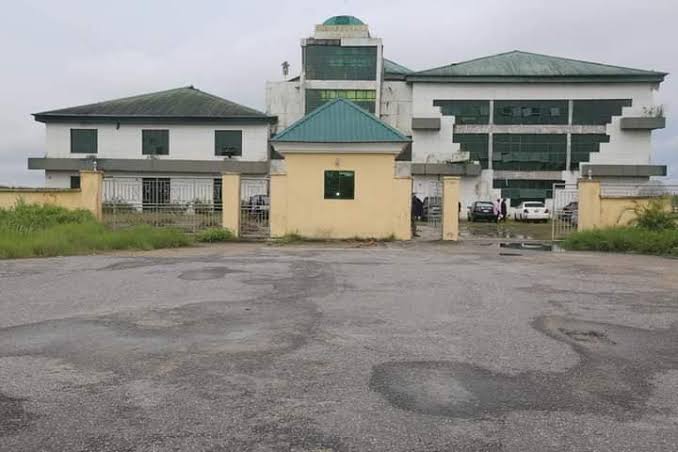
Frank-Opigo Decries Neglect of Bayelsa State Library, Urges Government to Revive Facility
- Former Commissioner Offers to Mobilise Private Support, Says Functional Library Is Critical to Developing Reading Culture
By Jonah Fubara, YENAGOA – A former Bayelsa State Commissioner for Works and Transport, Emmanuel Frank-Opigo, has decried the prolonged neglect of the Bayelsa State Library in Yenagoa, calling on successive administrations to rehabilitate and equip the facility to promote reading and intellectual development among young people.
Frank-Opigo, who is also a former Director of Works at the Niger Delta University and former Chairman of the Association of Nigerian Authors (ANA), Bayelsa State Chapter, described the library’s present condition as a major setback for a state with a rich literary heritage.
Speaking in an interview with Reflector Magazine, the engineer and author expressed disappointment that the state government had failed to make the library functional despite the availability of a building that could serve as a major centre for learning and research.
He said the facility, which is considerably larger than the Port Harcourt Library, could transform the lives of young people if properly renovated, equipped with computers and stocked with relevant books.
According to him, the Port Harcourt Library played a significant role in shaping his intellectual and literary development, having provided him access to books across different disciplines from his early school days.
He recalled obtaining his library card in 1972 as a secondary school student, an experience that exposed him to the works of renowned Nigerian and international authors, scientific literature, biographies and other educational materials.
Frank-Opigo lamented that Bayelsa’s younger generation was being deprived of similar opportunities because of the non-functional state of the public library.
He disclosed that his concern over the condition of the facility had prompted him to consider mobilising private-sector support for its rehabilitation.
The author said he had approached the Chairman of the Bayelsa State Library Board, obtained an estimate for the renovation of the building and subsequently prepared additional cost estimates covering furniture, books and computers.
His intention, he explained, was to approach corporate organisations and other potential sponsors to support the project.
However, he said his initial attempt to secure assistance from an organisation did not receive a response, a development that discouraged him from extending the proposal to other organisations at the time.
Despite the setback, Frank-Opigo said his desire to see the library restored remained strong, expressing hope that the present administration or its successor would prioritise the rehabilitation of the facility.
He also questioned why a state government would allow such an important educational infrastructure to deteriorate when the resources required to restore it were relatively insignificant compared with expenditure on other public activities.
Frank-Opigo further criticised what he described as the practice of giving public facilities cosmetic attention without ensuring their long-term functionality.
He recalled being told that only the front of the library building was painted ahead of its commissioning, allegedly to create a favourable impression for guests.
Describing the situation as unacceptable, he said Bayelsa could not continue to neglect a facility that should serve as a resource centre for students, researchers, writers and the wider public.
The former ANA chairman also identified the Lambert Ototo Library, a privately owned facility in Yenagoa, as an example of the contribution individuals could make towards promoting a reading culture.
He described the library as well-stocked, with a substantial collection of books that its owner continues to replenish, but regretted that many residents were unaware of its existence and therefore did not patronise it.
He called for greater public awareness of the facility to encourage more people, particularly young readers, to take advantage of its resources.
On the declining reading culture among young people, Frank-Opigo acknowledged that changing lifestyles and the growing influence of digital technology had affected reading habits, but maintained that the most important consideration was for people to cultivate a genuine interest in reading, whether through printed books or digital platforms.
He, however, emphasised the importance of reading literary classics, arguing that contemporary writers and students of literature needed to understand the foundational works that shaped modern literary expression.
He maintained that a functional public library remained indispensable to this process, particularly for children from homes where access to books was limited.
“Not every household has books because not every parent is an educationist like my father, who maintained a large collection of books at home,” he said.
Frank-Opigo stressed that a properly equipped state library would provide equal opportunities for children and young people to discover literature, develop their creativity and pursue their intellectual interests, regardless of their family backgrounds.
He urged the Bayelsa State Government to move beyond promises and take concrete steps to restore the facility, warning that the continued neglect of the library would undermine efforts to nurture the next generation of readers, writers and intellectuals.