TUC Rejects ₦70,000 Transport Allowance, Demands Salary Increase
By Tams Jonah, ABUJA – The Trade Union Congress of Nigeria (TUC) has rejected the Federal Government’s proposed ₦70,000 monthly transportation allowance for workers over six months, demanding an immediate salary increase and full implementation of the agreement with the Joint Health Sector Unions (JOHESU).
The congress described temporary wage awards as inadequate and unsustainable, insisting that workers require permanent salary adjustments to cope with rising living costs.
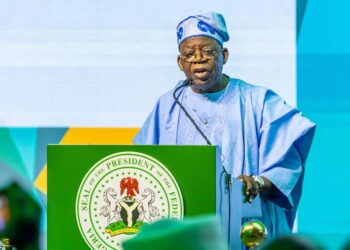
President Bola Tinubu announced the six-month transportation allowance on Tuesday, following a conciliation meeting between Federal Government representatives and the leadership of the Nigeria Labour Congress (NLC). The payment is expected to commence in November 2026.
However, in a statement issued on Wednesday, TUC President, Festus Osifo, and Secretary-General, Nuhu Toro, said the congress had earlier written to the Federal Government on October 8, urging an immediate review of workers’ salaries to address the economic hardship confronting Nigerians.
The labour centre argued that the government did not need to wait for negotiations on a new national minimum wage before increasing workers’ earnings, noting that there was no legal limit on the maximum salary an employer could pay.
It proposed that the Federal Government could increase the salary of its lowest-paid worker from the current ₦70,000 minimum wage to ₦300,000, with appropriate adjustments across other salary grades.
The TUC also questioned the sustainability of temporary wage awards, citing what it described as the incomplete and irregular implementation of the ₦40,000 wage award agreed upon by the Federal Government and organised labour in October 2023.
According to the congress, some workers are still owed one or two months of the previous award, while others did not receive any payment. It further claimed that more than 80 per cent of states and workers in the informal sector did not benefit from the scheme.
The union maintained that permanent salary increases would provide more reliable relief than temporary allowances, which it said had failed to reach all eligible workers.
Beyond salary adjustments, the TUC called on federal, state and local governments to introduce practical measures to reduce the cost of essential goods and services, ensure timely payment of salaries and pensions, protect jobs and revitalise the productive sector to create decent employment.
The congress said the economic hardship extended beyond federal workers to include state and local government employees, pensioners, private-sector workers and those in the informal economy.
On JOHESU Agreement
The TUC also called for the immediate implementation of the outstanding agreement with the Joint Health Sector Unions, particularly the adjustment of the Consolidated Health Salary Structure (CONHESS).
The congress said its president had led an organised labour delegation, including JOHESU representatives, in negotiations aimed at resolving the industrial dispute that lasted several months.
It explained that the negotiations resulted in a conciliation meeting at the Federal Ministry of Labour and Employment, where an agreement was reached, leading to the suspension of the industrial action by the health workers.
However, the TUC alleged that the Federal Government had failed to fulfil its obligations under the agreement, particularly the adjustment of CONHESS, which it said remained outstanding seven months after the settlement.
It described the delay as a breach of good faith that could undermine confidence in collective bargaining and industrial relations.
The congress therefore demanded the immediate implementation of the agreed salary adjustment, a clear timetable for implementation, the provision of necessary budgetary allocations and the resolution of all outstanding issues in consultation with the affected unions.
It warned that health workers should not be expected to continue providing essential services while agreements reached with them remained unfulfilled.
The TUC reiterated its commitment to defending workers’ rights and pursuing lawful measures to compel the government to honour its obligations.
It said it would await the outcome of further engagements with the Federal Government before deciding on its next line of action.