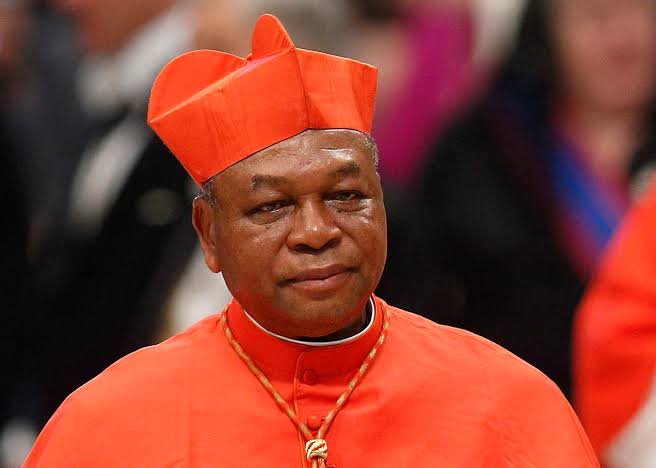
Those Who Were Kids When Onaiyekan Started His Ministry Are Now Disrespecting The Man of God – Amaechi
By Tams Jonah, ABUJA — Former Rivers State Governor and African Democratic Congress (ADC) vice-presidential candidate, Rotimi Amaechi, has defended the right of the church to speak truth to those in authority, insisting that religious leaders must not be intimidated into silence on matters affecting the nation.
Amaechi made the remarks on Tuesday during an appearance on Politics Today, a current affairs programme on Channels Television, where he addressed the role of faith-based institutions in Nigeria’s democratic process.
He argued that the church has a moral responsibility to hold public office holders accountable and should continue to offer guidance on issues of governance, justice, and national development without fear of political backlash.
According to him, religious leaders have historically contributed to promoting justice and defending the public interest, adding that attempts to discourage them from expressing opinions on national affairs undermine their societal role.
Amaechi also expressed concern over criticisms directed at John Cardinal Onaiyekan, describing the cleric as a respected religious leader whose years of service deserve honour rather than attacks.
“Those who were children when Onaiyekan started his ministry are now disrespecting the man of God,” Amaechi said, lamenting what he described as the growing intolerance toward respected voices in the country.
His comments followed recent remarks by Cardinal Onaiyekan, who alleged that the current administration was determined to secure victory in the 2027 general election by every possible means.
The cardinal’s statement generated widespread public attention and ignited political debate, with the Presidency and supporters of the ruling All Progressives Congress (APC) strongly rejecting the allegation. They described the comments as inappropriate and politically charged.
The exchange has further intensified discussions over the role of religious leaders in public discourse and the extent to which they should comment on political developments in Nigeria.